
There is a particular sound to autumn in a British schoolyard: the crack of two horse chestnuts meeting at the end of a shoelace, and the argument that follows about whether it counted. All the game needs is a bag of conkers, a nail and a string. It costs nothing, has no governing body worth arguing with, and has outlived almost every playground craze since. That is a folk tradition doing what folk traditions do best.
The horse chestnut is not native to Britain. It arrived from south-eastern Europe and Asia Minor in the sixteenth or early seventeenth century as an ornamental — something to line an avenue or shade a country house lawn. Its seeds are not true chestnuts. Sweet chestnuts are roasted and eaten; horse chestnuts are bitter, mildly toxic and useless on a plate. For two hundred years the tree was admired for its candles of white flowers in spring and the deep shade of its leaves in summer. Nobody had thought of putting the fruit on a string.
Even the word is contested. One theory links conker to conch, and to an older children's game played with snail shells threaded on string. Another points to conqueror. Either way, the language carries the game's muddled origins with it.
The first clear printed mention of the game as children play it today — conker against conker on string — comes from the Isle of Wight in 1848. Before that, children knocked together whatever the season offered: snail shells, hazelnuts, hard berries, even stones with holes in them. The horse chestnut won because it was hard, round, easy to pierce and free in enormous quantities. Every park, churchyard and school railing had a supply.
By the early twentieth century, conkers was standard currency in the autumn term, played on the way to school, at break, and in the last of the light afterwards. It was never organised from the top down. Adults supplied the trees; children supplied the rules.
Ask two adults to write the rules down and you get two different documents. Ask a class of nine-year-olds and you get a furious debate about string length. Here is the version most playgrounds settle on:
A fresh conker has no score at all: it is a none-er, sometimes called a cheese. Beat one and you have a one-er, beat two a two-er, and so on. A conker with a dozen scalps is a twelver, and by then it usually has a name.
Every playground has its hardening rituals: soak it in vinegar, bake it in the oven, paint it with varnish, keep it in a drawer for a year. Most of them are superstition or outright sabotage. Baking makes a conker brittle, so it cracks early. Vinegar leaves a smell and not much else. Varnish is generally treated as cheating, and a glossy conker slides off a string anyway.
The genuine advantage is duller than the folklore. Leave a conker somewhere dry and airy for a few days so it sheds a little moisture, keep the string short so the swing stays controlled, and aim with the edge of the conker rather than the flat. That is most of the art.
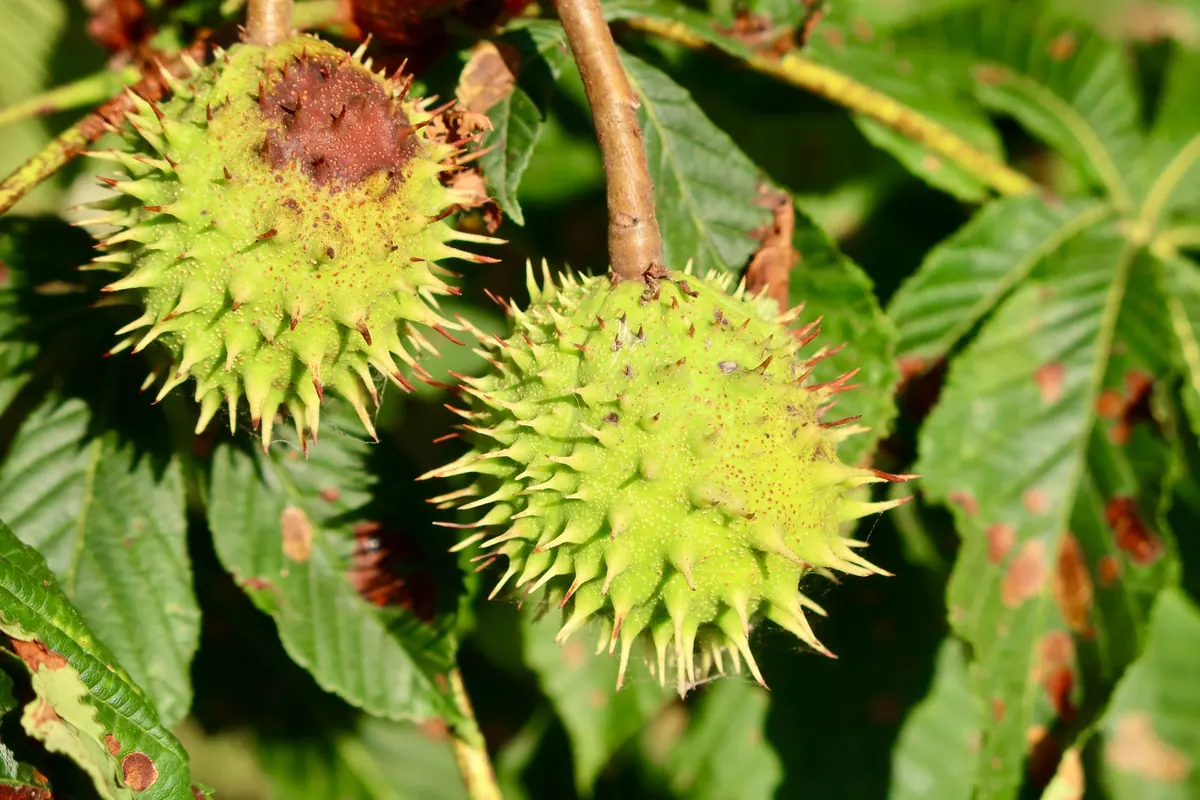
In the 2000s a number of schools banned conkers, and the headlines wrote themselves. The reasons given were bruised knuckles, minor injuries and the fear of complaints. At the same time, horse chestnuts were having trouble of their own: the leaf-mining moth and bleeding canker left many trees looking scorched by midsummer, and some autumns produced a thin crop.
Competitions helped keep the game visible. The World Conker Championships, staged in Northamptonshire since the 1960s, has drawn players from several continents and has occasionally had to shift location when the local crop failed. What really saved the game, though, was not the championships. It was that conkers needs no equipment, no pitch, no subscription and no adult to run it.
Conkers teaches things school rarely does: how to negotiate a rule, how to lose something you had grown fond of, how to take a small risk in front of your friends. It creates a private economy in which scoring is oral history and a good conker buys two weeks of fame. That is why adults still stoop to pick one up on a walk in October and put it in a coat pocket. The season is short; the memory is long.
If you are organising conkers at a school, a club or a family gathering, a little preparation saves a lot of grief.
One thing worth saying plainly: horse chestnuts are not food. They contain aescin and are mildly toxic, so keep them away from toddlers who might chew them and from dogs, and wash your hands after drilling. If a child does swallow one and you are concerned, speak to a health professional rather than waiting to see how it goes. Beyond that, the game looks after itself.
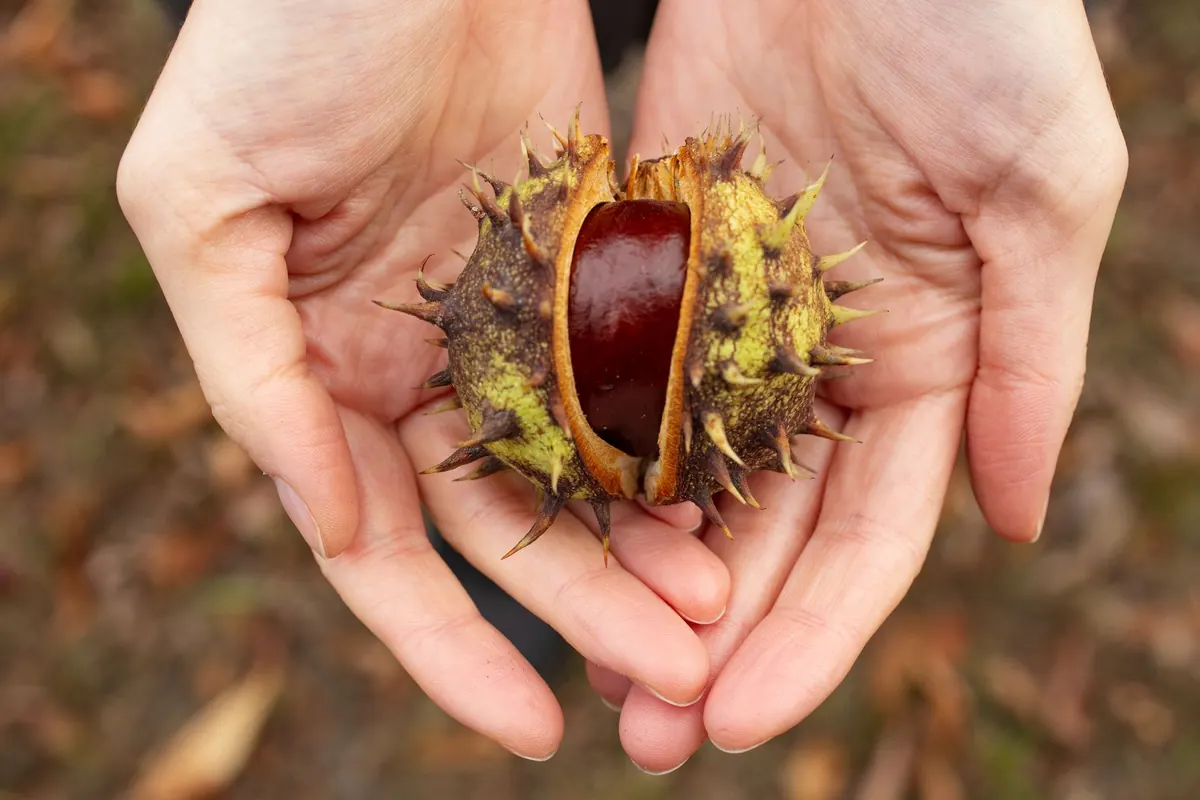
Photo: Ana Kenk / Pexels
A record-setting conker at this year's championship has players rethinking grip, stance and strike. Here is how the...
New research on horse chestnut diseases shows how leaf miner, leaf blotch and bleeding canker affect conker size and...
Conkers looks like a simple playground game, but its ancestry runs through Roman nut games and snail shells to the...

All the conker news, games, and lore..
